Six pallets
Loaded straight and two abreast, that is three rows and something close to twelve feet of floor. Comfortably past the eight-foot mark where volume pricing begins, and nowhere near a full trailer.

A load of six to eighteen pallets falls into a gap. It is long enough that a class-rated LTL quote starts charging for floor instead of weight, and short enough that buying a whole trailer means paying for deck you will never fill. Partial truckload sells that middle as a block of space on a truck carrying two or three shipments and no terminal stops in between. Carrier thresholds below were read on 2026-07-29, with the address printed beside each figure.
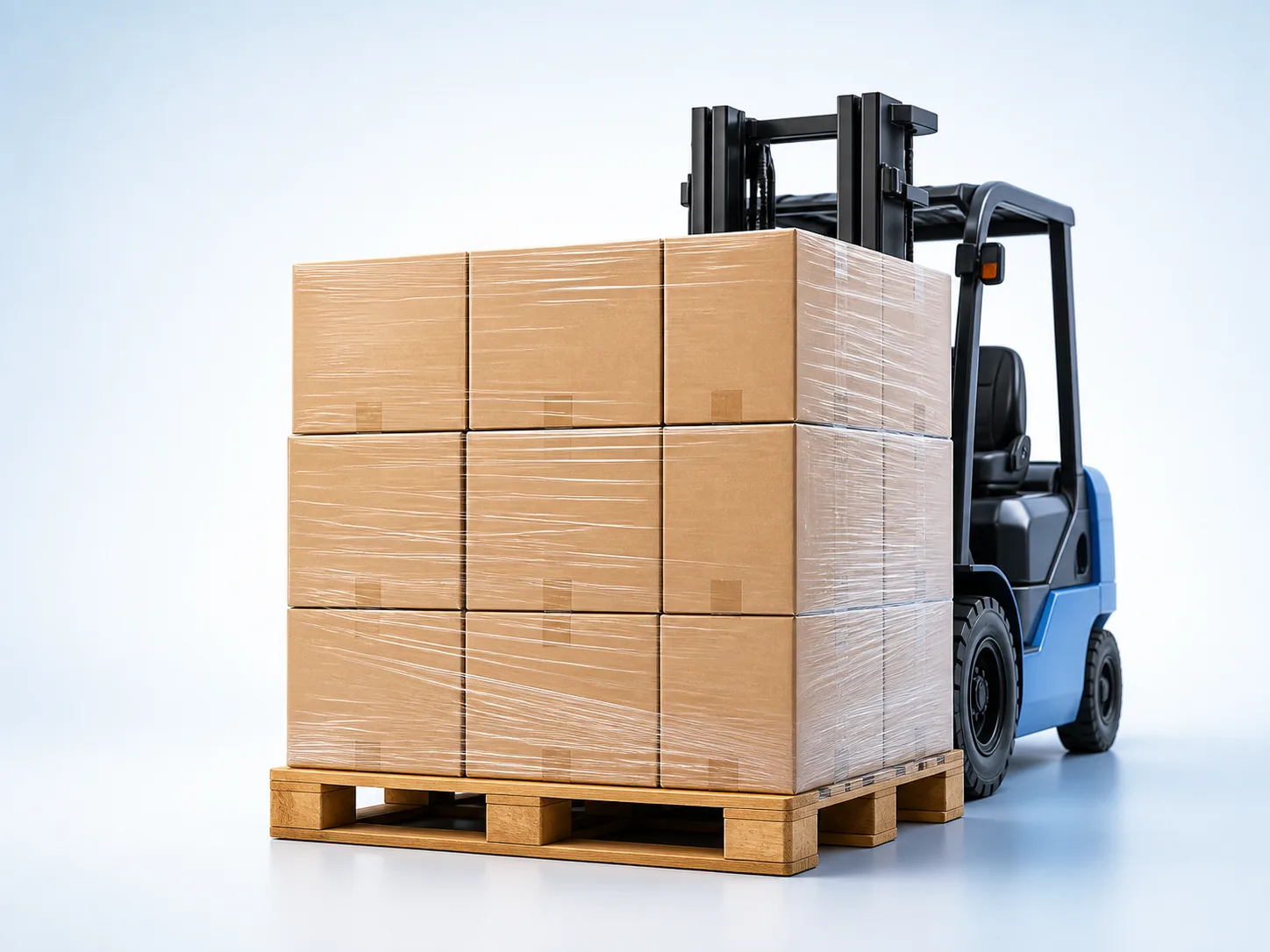
No prices appear on this page. A partial load is quoted lane by lane against the trucks running that week, so a table of figures here would be fiction by tomorrow.
Partial truckload has no legal definition and no tariff item of its own. What does exist is each carrier's published mark for when a shipment stops being ordinary LTL and when it becomes a whole truck. Estes prints both marks on one page, which makes the gap between them easy to see.
| Service | Published qualification | What that leaves in the middle |
|---|---|---|
| Volume LTL | 5,000 pounds or more, or at least eight linear feet of the trailer | Anything past eight feet of deck has already left ordinary class-rated LTL behind |
| Truckload | 30,000 pounds or more, or at least 48 linear feet of the trailer | A whole trailer is not warranted until roughly the length of the deck itself |
Forty feet of deck sit between those two lines. That band is the entire subject of this page. Other carriers set their own marks a few feet either side, which is exactly why the mode is described so loosely: you are not looking for a standard, you are looking for the tariff of the carrier who will haul it.
Carriers in this band think in deck feet, so translate before you call. Estes publishes the standard pallet as 48 by 40 inches with a maximum weight limit of 2500 lbs, and Utility Trailer publishes an inside width at the wearband of 100 or 101 inches on its composite dry vans. Two of those pallets stand side by side across that width, and each row uses the length of one pallet.
Loaded straight and two abreast, that is three rows and something close to twelve feet of floor. Comfortably past the eight-foot mark where volume pricing begins, and nowhere near a full trailer.
Six rows, roughly twenty-four feet, which is about half a 53-foot deck. This is the centre of the partial band and the size where quotes diverge most between modes.
Nine rows and somewhere near thirty-six feet. Add much more and the arithmetic starts arguing for the whole trailer, since only a dozen feet remain to sell to anybody else.
Turn the pallets so the 40-inch edge runs down the trailer and the same count eats less length, which is worth doing when the freight allows it and worth telling the carrier about when it does not. Loads that cannot be stacked or turned occupy their floor and nothing changes that, so say so on the quote request rather than at the dock.
A partial load is put on the deck at origin and taken off at destination. An LTL shipment of the same pallets is moved on and off a trailer again at every terminal it passes through, and each of those moves is a chance for a forklift to find a corner.
Dock crews consolidating freight will put another shipper's skid on top of yours if the paperwork allows it. On a partial the floor you bought stays yours, and nothing lands on the freight unless you loaded it there.
Light, bulky and oddly shaped goods rate badly under a system built around density. Buying floor space sidesteps that argument, because the carrier is selling you the floor whatever is standing on it.
None of that makes partial the cheap answer by default. It makes it the answer that survives the trip, which is a different thing to weigh against the quote. Freight that is dense, boxed and boring usually still belongs in ordinary LTL.
| What they ask | Why it moves the price |
|---|---|
| Deck feet, or the piece dimensions to work them out | The unit being sold. Guessing low here is how a rate gets revised after the truck is loaded |
| Whether the freight stacks, and to what height | Stackable freight lets the carrier sell the airspace above you to somebody else, and that shows up in your rate |
| Loading and unloading windows at both ends | The truck is committed to your load for the day. Waiting time is billable in a way it never is on an LTL pickup |
| Dock, forklift, or neither | Without equipment at one end the load needs a lift gate or a driver who is willing to hand-unload, and both are arranged in advance or not at all |
| Whether the freight can ride upright only | Do-not-tip loads restrict how the rest of the trailer is filled around you |
Bring the same list to an LTL quote and half of it will go unused. Bring an LTL bill of lading to a partial quote and you will be asked all five questions on the phone anyway.
A pair of skids is standard LTL work and the terminal network exists to move it cheaply. Pushing that into a partial buys space you cannot fill.
Once the load crosses the published truckload qualification, the trailer is effectively yours already. Pay for it deliberately rather than by accident.
Residential pickup or delivery is awkward on any trailer that cannot turn around, and a 53-foot deck in a cul-de-sac is a failed appointment waiting to happen.
SMKlog sells US domestic parcel labels directly through the calculator, with live rates from several carriers and no account to open. Freight is a different job: a partial load is priced by a person against carrier tariffs and the trucks running your lane, so it goes through the review form rather than through a rate table. We do not operate trucks, trailers or terminals. Everything on this page describing a carrier's rules is describing that carrier, sourced and dated above.
Sources read 2026-07-29: estes-express.com/services/volume-and-truckload, estes-express.com/resources/what-is/ltl-freight-shipping, utilitytrailer.mediafuel.net/dry-vans/specifications.
There is no single industry definition, only carrier thresholds. Estes qualifies a shipment for volume LTL at 5,000 pounds or more, or at least eight linear feet of the trailer, and for truckload at 30,000 pounds or more, or at least 48 linear feet. Loads that sit between those two marks are the ones sold as partial.
Six to eighteen covers most of them. Estes publishes the standard pallet as 48 by 40 inches, and loaded straight a pair of them side by side uses about four feet of deck, so six pallets take roughly twelve feet and eighteen take roughly thirty-six.
It becomes competitive once a shipment is long enough that an LTL carrier stops rating it on weight and class and starts rating it on the floor it occupies. Below that point ordinary LTL normally wins, and only your dimensions decide which side of the line you are on.
No. It is loaded at your door, rides alongside one or two other shipments, and comes off at the consignee. Cutting out the dock transfers is the reason fragile and awkward loads end up in this mode even when the rate is not the lowest.
A quote form will usually ask, but class drives the number far less here than deck feet, total weight and the two appointment windows. Have the piece count, the dimensions of each piece and the loading method ready before the class.