Freight, defined

What is freight shipping?

Freight is cargo that travels on a truck instead of through a package sorting network. It usually sits on a pallet, it is rated per shipment rather than per box, and the number comes from a person because the things that move it live at the loading dock rather than on the scale. This page draws the boundary using published figures, then lists what you have to hand over before anyone can price your load.

Carrier limits citedTariff wording quotedRead 2026-07-28
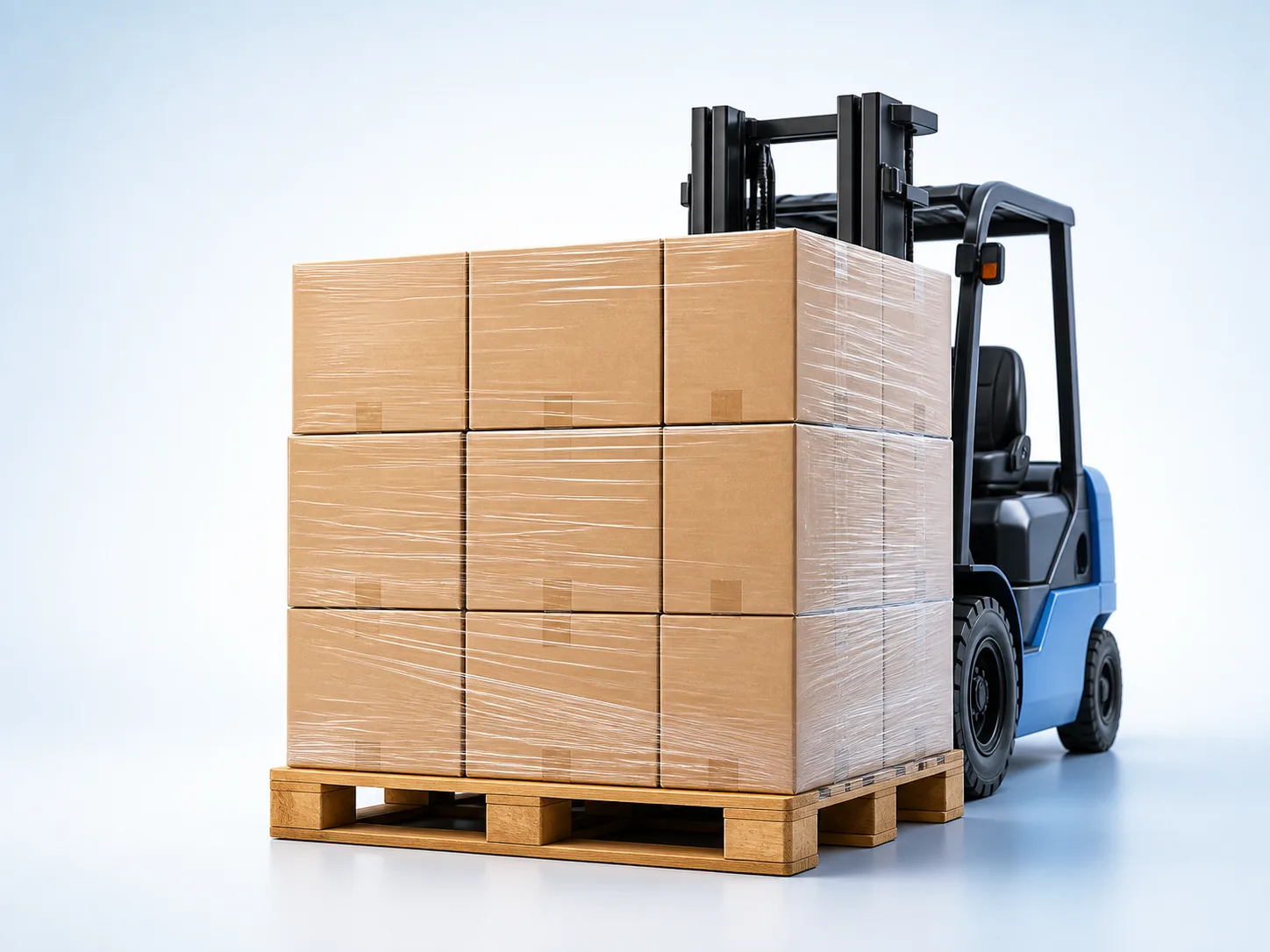
Palletised freight loaded onto a truck
Where the conveyor stops

Above a carrier's package ceiling, boxes stop riding belts and start riding forks.

The line a carrier draws itself

There is no legal definition of freight that a shipper can look up, but there is a commercial one, and each carrier prints it. Once a shipment breaks the package ceiling, the automated network physically cannot handle it, so a different product with different paperwork takes over. These are the FedEx figures, read on their own pages on 2026-07-28.

Ceilings quoted from fedex.com/en-us/shipping/ground.html and fedex.com/en-us/shipping/ground/economy.html, both read 2026-07-28. Girth means twice the width plus twice the height.
ProductWeight ceilingSize ceilingAbove it
FedEx Ground and FedEx Home Delivery150 lb108 in long, 165 in length plus girthMoves as freight
FedEx Ground Economy70 lb130 in length plus girthMoves on a heavier package product, then freight

Weight alone rarely settles it. A 90 lb crate of machine parts is a package everywhere; a 60 lb sofa cushion is not, because the length rule catches it first. Anything on a built pallet has already crossed both lines, since a loaded skid clears 108 in of length plus girth before you have stacked anything on it.

Three products live above that line

Freight is not one service. The FedEx Freight 100 series rules tariff, read on fedex.com 2026-07-28, defines the two ends of the range precisely enough to quote, and everything between them is sold as volume or partial capacity.

Less-than-truckload

Defined in that tariff as freight weighing under 20,000 pounds and occupying less than one pup, a pup being one trailer up to 29 lineal feet of loading space. Your skids ride with other shippers' skids and pass through terminals on the way.

Truckload

The same tariff calls it 20,000 pounds or more, or freight occupying one pup or more. The definition of a vehicle there is a trailer not exceeding 53 feet, or two trailers each not exceeding 29 feet, which is the equipment you are buying outright.

Volume and partial

The gap between those definitions has no published rule, which is why it is quoted case by case. Loads of roughly six to fourteen skids often price better here than under either neighbor, and the only way to find out is to ask for both.

A fourth answer exists for anything that will not fit a dry van at all: flatbed, step deck, or a specialized trailer, priced against permits and route rather than against class. Those requests still start the same way, with dimensions and a pickup address.

What a manager needs before a price exists

A parcel quote needs four facts and returns in seconds. A freight quote needs eight, and every one of them is something only you can see. Gather these before you write to anybody and the answer comes back the same day rather than after three rounds of questions.

  1. Both addresses, with the type of place attached. A warehouse with a dock, a shop on a retail strip, a house on a cul-de-sac and a construction site are four different prices for the same cargo, and the difference is charged as an accessorial rather than buried in the rate.
  2. The count of handling units. Not the number of cartons: the number of things a pallet jack will lift. Six boxes banded onto one skid is one handling unit, and the bill of lading has to say so or the carrier counts what it sees.
  3. Dimensions of each unit as it will leave your floor. Wrapped, strapped, and including any overhang. Leave them out and the carrier supplies its own: item 616-2B in the FedEx Freight tariff cubes each handling unit to 48 by 40 by 96 inches when dimension information is not provided.
  4. Weight per unit, and the total. Reweighing happens on the dock scale as a matter of routine, so a guess that flatters you comes back as a correction invoice weeks later.
  5. Stackable, or not. This is a capacity question, not a preference. The same tariff item cubes any unit 60 inches or taller, or marked non-stackable, to 96 inches of height for rating.
  6. What the commodity actually is. Plain description, plus the classification if you know it. Density drives most of it, and the class calculator will get you close before anyone quotes.
  7. Equipment and access at each end. Forklift, dock leveler, liftgate, inside delivery, tight street, gated site with hours. Each is a named service with its own charge, and each is far cheaper agreed in advance than discovered by a driver.
  8. Ready date, and any appointment window. Freight moves on the day the trailer is there. A load ready Thursday afternoon and a receiver who books Monday mornings is a schedule, not a problem, provided both are said out loud.

Send those eight details for review Or price a parcel instantly

Why the number can move after you book

A freight quote is a rating built from what you declared. When the dock disagrees with the paperwork, the tariff decides, and three rules do most of the damage.

Deemed weight on bulky loads

Item 616-2B sets a minimum of 10 pounds per cubic foot below ten lineal feet, and 1,000 pounds per lineal foot at ten lineal feet and above. Light cargo that eats floor space is billed on the space.

Capacity load triggers

Once freight takes enough of the trailer that nothing can ride beside it, the shipment leaves ordinary LTL rating. FedEx Freight names 15 linear feet with a width condition; Old Dominion names 20 linear feet in tariff ODFL 100-Q, read 2026-07-28.

Reclassification

A dock that measures your skid and recomputes density can move the class up, and the whole rate with it. Accurate dimensions on the bill of lading are the cheapest protection available.

SMKlog sells United States domestic parcel labels through the calculator with no account, and routes anything above the package ceiling to a freight review where a person prices it against real carrier capacity. We are not a trucking company and we do not own terminals; the rules described on this page belong to the carriers that publish them.

Common questions

What is freight shipping?

Freight is cargo that moves on a truck rather than through a package sorting network, usually strapped to a pallet or built into a crate. It is rated per shipment instead of per box, it is quoted by a person rather than a checkout, and it starts where a carrier's own package limits end.

What makes something freight instead of a parcel?

The carrier's published package ceiling. FedEx states that FedEx Ground and FedEx Home Delivery carry packages up to 150 lbs., 108 in in length and 165 in in length plus girth, checked on fedex.com 2026-07-28; a shipment past that has to move as freight regardless of what it is.

What is the difference between LTL and truckload?

The FedEx Freight rules tariff read on 2026-07-28 defines LTL as freight weighing less than 20,000 pounds and occupying less than one pup, and truckload as 20,000 pounds or more or occupying one pup or more. A pup is one trailer up to 29 lineal feet of loading space.

Why can't a website quote freight instantly?

Because half the price sits outside the shipment. Whether a forklift waits at each end, whether the driver needs an appointment, whether the truck can reach the door: those answers change the bill more than the weight does, and no form infers them reliably.

What happens if I leave the dimensions off?

The carrier fills them in against you. FedEx Freight item 616-2B, read 2026-07-28, cubes each handling unit to 48 by 40 by 96 inches when dimension information is not provided, which is usually larger than the pallet you actually built.