Label, postage, stamp
All three name the payment. A stamp is postage without routing data; a modern parcel label is postage with the routing data printed alongside it, which is why the two are not interchangeable on a package.

Strip away the branding and a shipping label is a purchase receipt with routing instructions printed on it. It records that postage was paid for one described box on one described route, and it encodes enough of that record for a sorting machine to act on without a human reading a word. The postal definitions quoted further down were recorded 2026-07-29, and so were the label prices at the foot of the page.
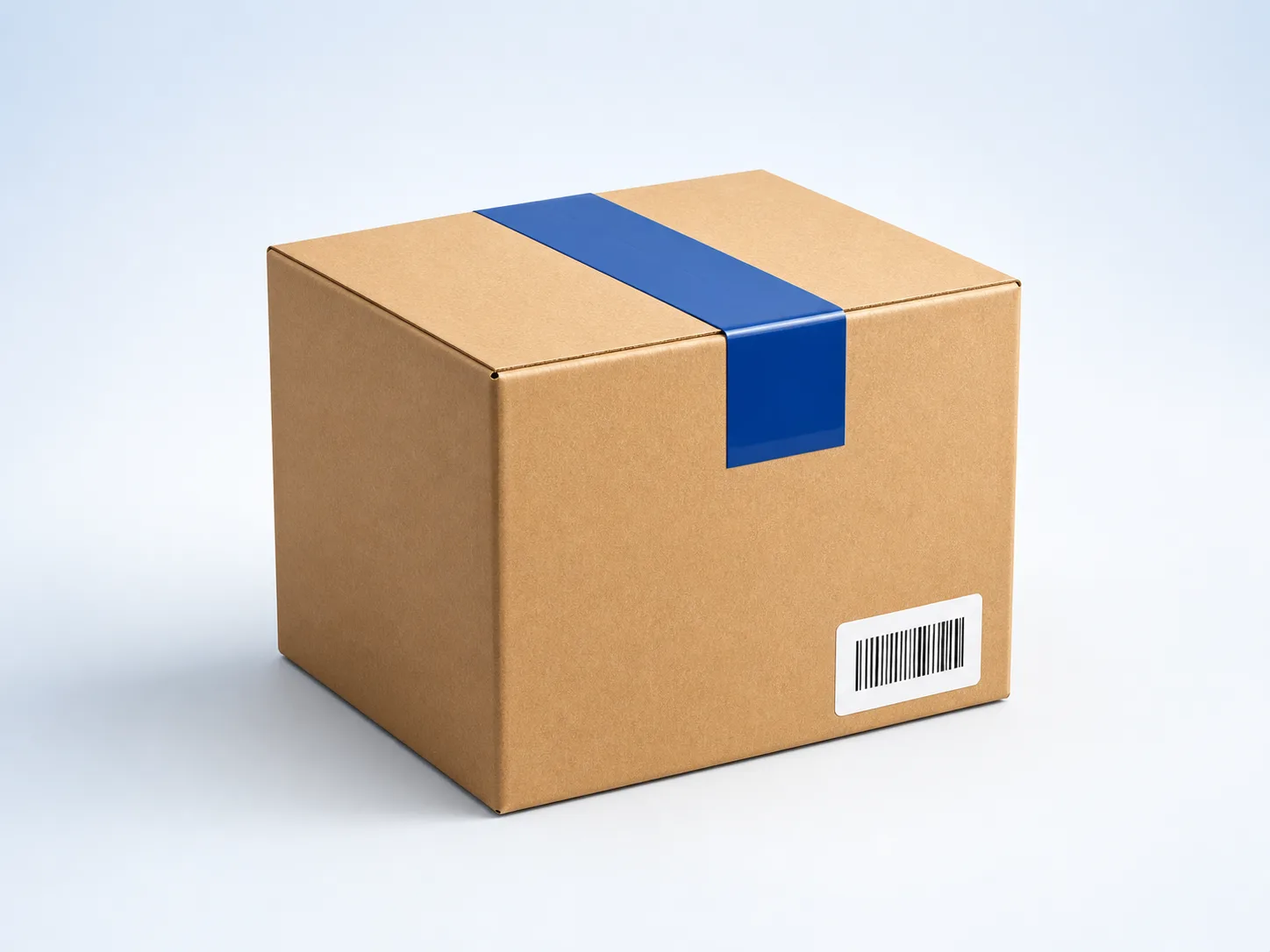
The number under the bars belongs to a single box. Reuse it on a second one and the network notices within a day.
A shipping label is proof that carriage has been paid for, addressed to a specific destination, on a specific service, for a parcel of specific declared dimensions and weight. Every one of those words carries consequences. Change the destination and the label is void. Change the service and the price was wrong. Change the box and the carrier re-measures it in a sorting facility and bills the difference back to whoever bought the label.
What a label does not do is describe what is inside. Contents are declared separately — on a customs form for anything crossing a border, on a hazard marking for anything regulated. A domestic parcel label says nothing about the goods, which is why nobody handling your box knows what it holds unless the outside of the carton tells them.
Layouts differ between carriers, but the same six jobs get done on every one. Placement of the two address blocks is set by the Postal Service in plain instructions: “Write your address (the ‘return address’) in the top-left corner” and “Write the delivery address in the center of the label or package (below and to the right of the return address, if possible)”, both read from usps.com on 2026-07-29.
| Block | What it holds | Who acts on it |
|---|---|---|
| Return address | Your name and street address, upper left | The carrier, if the parcel cannot be delivered and has to come back |
| Delivery address | The recipient, centered, below and right of the return block | The delivery driver, and the address-correction system before that |
| Service banner | The product name in large type across the top | Dock staff sorting parcels into the right stream by eye |
| Tracking barcode | A unique number for this parcel, printed as bars and as digits | Every scanner between the origin dock and the doorstep |
| Routing block | Destination facility codes, zone digits, sort keys | Automated sorters, which never read the street address at all |
| Reference fields | Order numbers, seller notes, ship date, weight | You, the recipient, and anybody reconciling an invoice later |
The tracking barcode is the piece worth understanding. On a postal parcel it is the Intelligent Mail package barcode, which PostalPro describes as encoding “routing information in the barcode which allows the Postal Service to use automated equipment to sort and track packages as they travel through our network to the post offices that will make final delivery”, read 2026-07-29. That is why a label printed too small or smudged across the bars stalls a parcel even when the human-readable address is perfectly legible: the machines never look at the address.
A label costs what the parcel costs, and the parcel is the box plus the route plus the service. Two shipments went from Berkeley Heights, NJ to Chicago, IL through our checkout on 2026-07-29 to make the point concrete: a one-pound padded mailer and a three-pound carton of books.
| Parcel | Service | Quoted window | Price |
|---|---|---|---|
| 9 × 6 × 2 in, 1 lb padded mailer | USPS Ground Advantage | 4-5 business days | $9.91 |
| 9 × 6 × 2 in, 1 lb | UPS Ground | 4-5 business days | $11.39 |
| 9 × 6 × 2 in, 1 lb | USPS Priority Mail | 4-5 business days | $14.49 |
| 9 × 6 × 2 in, 1 lb | UPS 3 Day Select | 4-5 business days | $15.13 |
| 9 × 6 × 2 in, 1 lb | UPS 2nd Day Air | 4-5 business days | $15.38 |
| 10 × 8 × 4 in, 3 lb carton of books | USPS Ground Advantage | 4-5 business days | $8.48 |
| 10 × 8 × 4 in, 3 lb | UPS Ground Saver | no window returned | $11.25 |
| 10 × 8 × 4 in, 3 lb | UPS Ground | 4-5 business days | $11.61 |
| 10 × 8 × 4 in, 3 lb | USPS Priority Mail | 4-5 business days | $14.71 |
| 10 × 8 × 4 in, 3 lb | FedEx Ground Economy | 5-6 business days | $15.72 |
Look at the two cheapest rows next to each other. The three-pound carton bought its label for $8.48 while the one-pound mailer paid $9.91 on the identical lane. Weight is only one input, and on short weights it is often not the one in charge. A label sold against a description of the box, not against the item you happen to be sending.
All three name the payment. A stamp is postage without routing data; a modern parcel label is postage with the routing data printed alongside it, which is why the two are not interchangeable on a package.
Carrier vocabulary for the same document on express and freight shipments. The airbill carries a few extra fields for declared value and special handling, and it still resolves to one barcode and one parcel.
Not a label at all. A manifest is the list of labels handed over in one pickup, which the driver scans as a batch instead of one at a time.
One more distinction is worth holding on to, because it causes more support messages than the rest combined. A label existing and a parcel moving are different events. When tracking reports that a label has been created, the barcode is registered and nothing has been scanned; our page on that status works through how long the gap normally lasts and when it stops being normal.
Label layouts and barcode specifications get reissued periodically. The wording above is what those two pages carried on the date shown; the prices belong to the two parcels described and to that day only.
It means postage has been bought for one described parcel traveling one described route on one named service. The paper is the evidence of that purchase and the instruction set the carrier's machines follow, which is why altering the box after printing breaks it.
A return address, a delivery address, the name of the service bought, a tracking barcode, sortation data the carrier's equipment reads, and whatever reference the seller chose to add. Nothing on it describes the contents.
Top left. usps.com instructs senders to write the return address in the top-left corner and the delivery address in the center of the label or package, below and to the right of the return address where possible, read 2026-07-29.
On a postal parcel it is the Intelligent Mail package barcode. PostalPro describes it as carrying routing information that lets automated equipment sort and track packages through the network to the post office making final delivery, read 2026-07-29.
Yes, and that is the part people trip over. The rate was calculated from the dimensions and weight declared at checkout, so a heavier or larger parcel under the same barcode gets re-measured in the network and billed for the difference afterward.
It means the barcode exists in the carrier's system but no facility has scanned the parcel yet. Buying a label and handing over a box are two separate events, and the gap between them is what that status describes.