Priority Mail service only
The flat-rate cartons carry Postal Service branding and are legally reserved for Priority Mail or Priority Mail Express. Putting a UPS or FedEx label on one voids acceptance.

The Postal Service publishes eleven Priority Mail flat-rate shapes, hands them out at no charge, and holds every one of them to a 70 lb ceiling. The measurements below are the inside dimensions from usps.com, read on 2026-08-11, so a parcel measured before packing lines up with what will actually close.
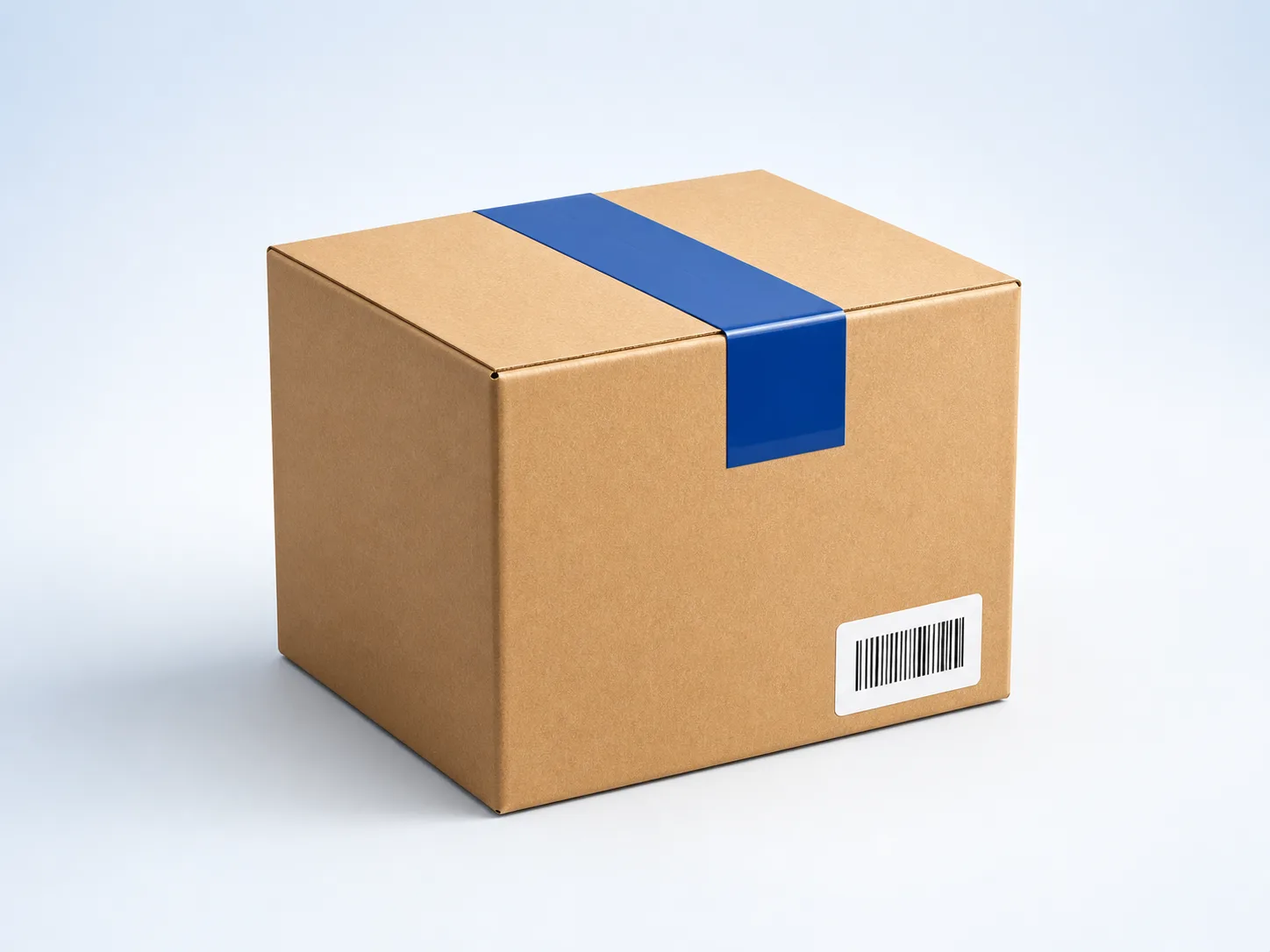
Envelopes for paper, boxes for parcels, and one 70 lb line running through everything.
Envelopes are for anything that will lie flat or bend without complaint: documents, prints, soft goods, thin apparel. The rate is a single flat number regardless of weight, so a stuffed envelope pays the same as an empty one, up to the same 70 lb ceiling that applies to the boxes.
| Envelope | Inside dimensions | What it holds |
|---|---|---|
| Flat Rate Envelope | 12 1/2 × 9 1/2 in | Contracts, a stack of prints, a thin book |
| Legal Flat Rate Envelope | 15 × 9 1/2 in | Legal paper, larger prints, magazines |
| Padded Flat Rate Envelope | 12 1/2 × 9 1/2 in | A single small book, a phone accessory, a soft-goods sample |
| Small Flat Rate Envelope | 10 × 6 in | Cards, keys, a memory card, jewelry that fits in a jeweller box |
| Window Flat Rate Envelope | 12 1/2 × 9 1/2 in exterior, 10 × 5 in window | Invoices where the address prints inside |
The Padded Flat Rate Envelope is the one small-parcel sellers reach for most because it earns a slightly better rate on the Postal Service tariff than the paper ones and adds a bubble lining that survives a mail sorter.
Boxes are for anything that will not lie flat: books stacked more than three deep, tools, hardware, a candle, a coffee mug, a folded pair of jeans. Same 70 lb ceiling as the envelopes, and the same one-price-fits-all model as long as the lid closes without bulging.
| Box | Inside dimensions | What it fits |
|---|---|---|
| Small Flat Rate Box | 8 5/8 × 5 3/8 × 1 5/8 in | Paperback, phone, watch, thin electronics |
| Medium Flat Rate Box — 1 (top-loading) | 11 × 8 1/2 × 5 1/2 in | Boots, a stack of books, a pair of speakers |
| Medium Flat Rate Box — 2 (side-loading) | 13 5/8 × 11 7/8 × 3 3/8 in | Framed print, laptop, folded jacket |
| Large Flat Rate Box | 12 × 11 3/4 × 5 1/2 in | Small kitchen appliance, several pairs of shoes |
| Large Flat Rate Board Game Box | 23 11/16 × 11 3/4 × 3 in | Board games, large prints, awards, long thin gear |
| APO/FPO/DPO Flat Rate Box | 12 × 11 3/4 × 5 1/2 in | Same footprint as the large flat-rate, priced lower on military mail |
The two medium boxes carry the same rate but different shapes; the top-loading one behaves like a shoebox and the side-loading one behaves like a lay-flat frame carton. Pick the one whose interior matches the item, not the one that will need void fill to keep the item from rattling.
The flat-rate cartons carry Postal Service branding and are legally reserved for Priority Mail or Priority Mail Express. Putting a UPS or FedEx label on one voids acceptance.
Order stacks from The Postal Store on usps.com and USPS delivers them with the regular mail in roughly a week, or grab a handful of each from any Post Office counter for nothing.
Priority Mail and Priority Mail Express both cap at 70 lb. Anything heavier ships on Ground Advantage or the private carriers, and needs a carton the sender supplies.
Flat-rate wins when the parcel is heavier or headed further than a weight-based rate would like. A dense two-pound box moving from New Jersey to California may beat the Small Flat Rate Box; a light five-pound box heading three states over may lose to weight-based Priority Mail or Ground Advantage. Priority Mail Cubic exists for exactly this middle ground and prices by the outside volume of the sender's own carton up to 20 lb, but it is a commercial product and not on the retail counter.
Weight and destination together decide whether a flat-rate box is cheaper than a per-pound label. Compare both before printing. The SMKlog calculator prices the same parcel across USPS, UPS and FedEx in one pass so the winner is visible before the label is bought.
USPS updates the kit and its rates without notice. Treat the sizes and rules above as what usps.com carried on the date shown, and re-check before a large order.
The Postal Service supplies the flat-rate boxes and envelopes at no charge; you pay only when the label is bought. Order from The Postal Store on usps.com or pick them up at a Post Office. They may only be used with Priority Mail or Priority Mail Express service.
Seventy pounds for every one of them. That is a Priority Mail service limit rather than a limit of the carton itself, and it applies to every size in the kit, from the small envelope to the large flat-rate board game box.
Paperback and most trade hardcovers slide into the Small Flat Rate Box. A pillar candle and a folded T-shirt travel comfortably in the top-loading Medium Flat Rate Box. Anything longer than about a foot needs the Large Flat Rate Box or a weight-based Priority Mail carton.
No. The cartons are branded and legally reserved for Priority Mail or Priority Mail Express labels. Handing them to another carrier voids the label and the parcel is subject to being returned or destroyed.
Ship it in your own carton on weight-based Priority Mail, Priority Mail Express or Ground Advantage. The 70 lb ceiling still applies, and the price then depends on weight, box size and the destination zone.