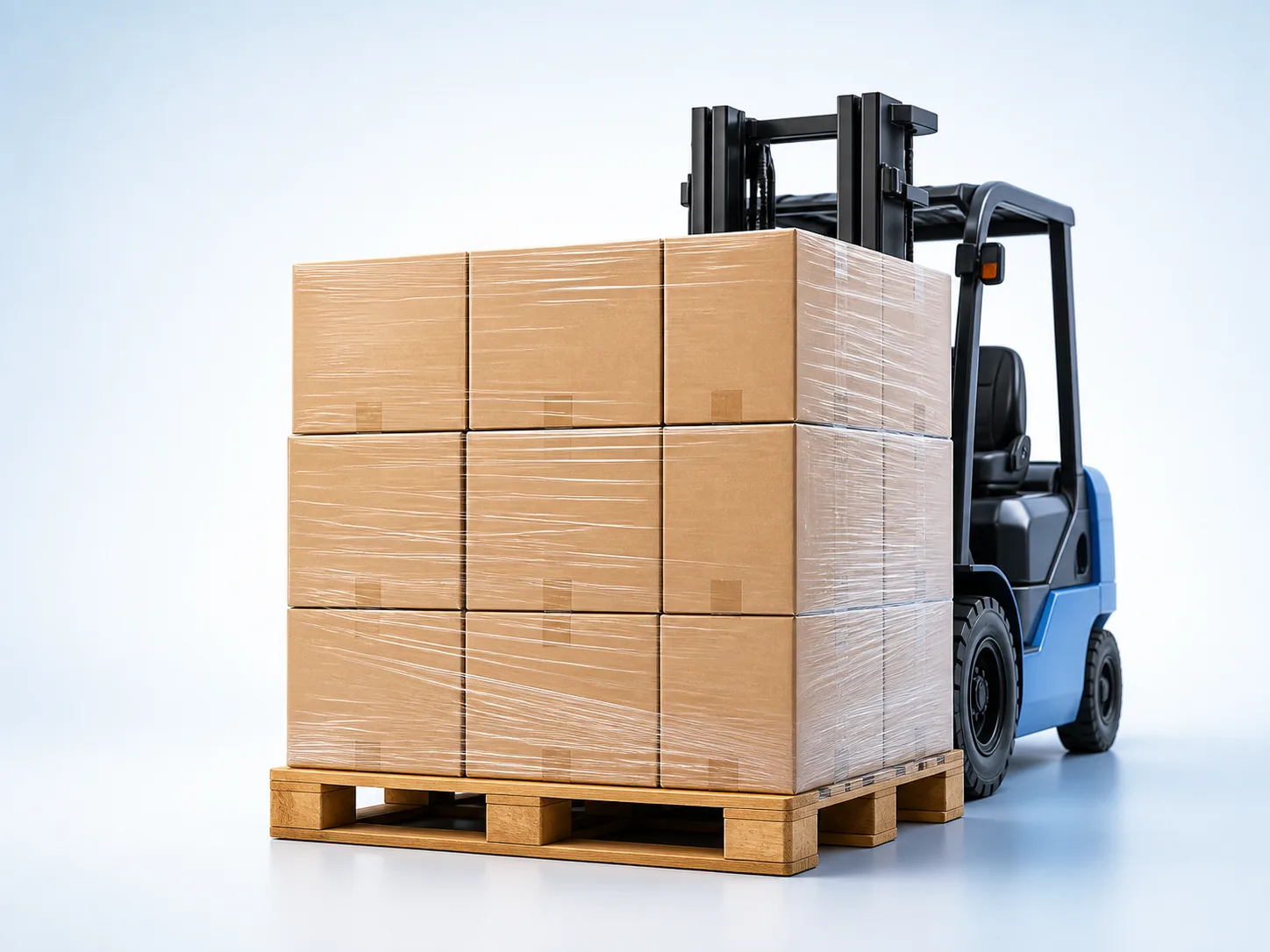
Freight to a house

Residential freight delivery: what a house changes

A pallet booked to a home is the same pallet, on the same truck, at a different price. Three things change the moment the destination stops being a warehouse: the address triggers its own tariff item, somebody has to call ahead and agree a time, and there is no dock, so the shipment has to come down four feet on hydraulics. Everything below was read from the carriers' own rules tariffs on 2026-07-29.

Three tariffs readDefinitions quotedPriced by a person
Residential freight delivery
No dock, no forklift, no loading bay

A driveway is not a facility, and the tariff language is written for facilities. Reading it before you book is what keeps the invoice recognisable.

What a carrier means by "residence"

The word is doing more work than it looks. Each carrier writes its own definition, they do not agree, and one of them reaches straight into home businesses that consider themselves commercial.

Definitions read from the rules tariffs published at fedex.com (FedEx Freight 100-Y, effective 5 January 2026), odfl.com (Tariff ODFL 100-Q, effective 14 April 2025) and rl-cdn.com (item effective 10 January 2026), all read 2026-07-29. Charge amounts are not reproduced here.
Carrier and itemWho the tariff calls residentialThe condition worth knowing
FedEx Freight, item 750-2A home or private residence, including locations where a business is operated from a home, and any shipment where the shipper has designated the address as a residenceDelivery to a residence is made to the front door, the back door, or inside the garage
Old Dominion, item 753-1A private residence, apartment, boat slip, estate or farm, with the term applied to the entire premisesConsigning the bill of lading to such an address counts by itself as asking for the service
R+L Carriers, item 753-2Private residences, apartments, condominiums, estates and farms, minus any part of the premises where merchandise or services are sold to the walk-in public in normal business hoursFloors above or below the level a truck can reach are served only where a lift exists and the labour to run it costs the carrier nothing

Two consequences fall straight out of that table. If you sell from a spare room, FedEx Freight bills you as a residence and R+L probably does not, because R+L's exception hangs on whether the public walks in. And if you write a home address on the bill of lading at all, Old Dominion treats the paperwork as the request, so there is no version of this where you quietly avoid the item by not ticking a box.

It can land at both ends

People budget for one residential line and get two. The tariffs are explicit that the charge is per event, not per shipment.

The charges provided in this item apply separately for pickup and separately for delivery and are in addition to inside pickup/delivery and all other lawful charges.FedEx Freight 100-Y rules tariff, item 750-2, fedex.com, effective 5 January 2026, read 2026-07-29

Old Dominion's item 753-1 says the same thing in its own words, and adds that the charge is collected from the shipper on prepaid shipments and from the consignee on collect ones. Sell a workbench from your garage to somebody else's garage and the address item is on the bill twice before a single mile is priced. That is the single most common surprise on a first freight invoice, and it is not an error.

The call before the truck

Freight does not turn up the way a parcel does. Somebody phones, a window is agreed, and an adult has to be standing there when the trailer arrives.

  • Old Dominion's item 753-1 states that before tender of delivery is initially attempted, the carrier will give the consignee notice of arrival and reach a mutual arrangement for delivery. That arrangement is the appointment, and it is built into the residential item rather than sold on top of it.
  • FedEx Freight goes further and says its notification charge does not apply on the initial notification for a shipment moving to a private residence, because the first call is already inside the residential price. Its own note adds that where a residential fee is charged, the notification fee is considered part of that charge.
  • The catch is on your side of the phone. FedEx Freight only promises that first call when it has been given the correct telephone number for the consignee, so a bill of lading without a working number is how a delivery turns into storage.
  • Old Dominion asks the shipper to list the name, telephone number and full address of the party who will arrange delivery. Filling that in properly is thirty seconds of work that removes the most likely reason a pallet sits at a terminal for a week.

Where the pallet actually ends up

Residential service buys a delivery to the property, not a delivery into the house. FedEx Freight is the most specific about the destination, and even its wording stops at a doorway.

Residential service does not include packing, unpacking, assembling, setup, or removal of debris.FedEx Freight 100-Y rules tariff, item 750-2, fedex.com, read 2026-07-29

The general pickup and delivery item behind it draws the line even harder. Unloading is the carrier's job, but that item excludes the special equipment used in hoisting, lowering, handling or placing freight into position, and says such equipment is to be furnished and operated by the consignor or consignee — hand trucks, four-wheel carts and non-riding pallet jacks excepted. In a driveway that reads as one sentence: the driver gets it to the ground, and the rest is you.

Taking the shipment further than that is inside delivery, a separate item with its own rate, and taking it to a specific room with the wrapping removed is the territory of the home delivery products covered on our white glove page. Neither is included because the address is residential.

The liftgate is not optional in practice

A house has no dock and almost never has a forklift, so the pallet has to come down mechanically. That makes the liftgate the second accessorial on nearly every residential bill.

It is worth booking deliberately rather than discovering on the day. Carriers price the platform whether or not you asked for it if their staff had to use another means to get the freight down, and they are not obliged to supply it where a suitable vehicle and operator are not available. The published rates, the minimums that a light pallet always pays, and the weight and size limits of the platform itself are all set out on our liftgate cost page.

Where a home also sits behind a gate, on a farm track or inside a private community, a second address item can stack on top: the location charge described on our limited access page. Some carriers bill residential and limited access under one item and some keep them apart, which decides whether a rural delivery is charged once or twice.

When the truck will not come down your street

Residential delivery assumes the trailer can reach the property. Where it cannot, the tariff has already told you what happens, and it is not a negotiation with the driver.

  • FedEx Freight's pickup and delivery item requires the site to be directly accessible or immediately adjacent to the carrier's equipment, suitable and practicable for that equipment to operate, and not a danger to the carrier.
  • The same item withdraws the service where operating a vehicle is impracticable because of the conditions of roads, streets, driveways, alleys or the approaches to them. Overhanging trees and a soft verge are ordinary reasons a 53-foot trailer stops at the top of a lane.
  • If nobody will be there, written arrangements can allow the shipment to be left unattended at the designated place — with the carrier stating plainly that it is not responsible for loss or damage after that delivery.
  • Measuring the approach before you book is worth more than any argument afterwards. A truck that cannot turn around is a redelivery, and redelivery is its own charge at every carrier on this page.

Two things a home address quietly cancels

The on-time refund

FedEx Freight's item 760 lists shipments requiring delivery to a home or private residence among the exclusions from its service-refund programme, alongside limited-access locations and anything needing a liftgate. A late residential pallet is simply late.

The cheap volume rate

Its volume services programme, item 759, lists residential pickup or delivery among the services not available under that pricing, except on shipments staying within one service centre. A tempting large-shipment quote can exclude the one thing you need.

Both are the kind of clause nobody reads until the shipment is already booked. Neither is hidden: they sit in the same tariff as the charge itself, on fedex.com, read 2026-07-29.

The one way out of the charge

There is exactly one exemption written into these items, and it is worth knowing before you decide the address is fixed.

Shipments picked up by the consignee at Carrier's destination terminal no later than the first business day after notice of arrival has been given will not be subject to additional charges provided in this Item.Old Dominion, Tariff ODFL 100-Q, item 753-1, odfl.com, read 2026-07-29

Collect it yourself and the residential item comes off. That trade only works if three things line up: a vehicle the pallet fits in, somebody at the terminal to put it there with a forklift, and a free morning inside the day after the call. For a single skid within driving distance of a service centre it is often the cheapest hour anyone spends on the shipment. For a household appliance in a rural county it is theory.

Price a pallet to a home address Or check whether it still fits a parcel

Common questions

What counts as a residential address for freight?

Whatever the tariff says, and the tariffs are broader than most people expect. FedEx Freight reaches a business run out of a home. Old Dominion names apartments, boat slips, estates and farms. R+L applies it to the whole premises unless part of it sells to the walk-in public during business hours.

Does the driver carry the pallet inside?

No. Unloading is included, but the tariff excludes the equipment used to hoist, lower or place freight into position, and it excludes assembling, unpacking and debris removal. Moving the pallet past the truck is inside delivery, which is a separate item with its own charge.

Will someone call before the truck arrives?

Yes, and on a residential bill you are already paying for it. Old Dominion gives notice of arrival and agrees a delivery arrangement before the first attempt. FedEx Freight folds that first call into the residential item, so it is not billed a second time as notification.

Is there any way to avoid the residential charge?

One clean way: collect the shipment yourself. Old Dominion's item exempts a shipment picked up at its destination terminal no later than the first business day after notice of arrival. You need a vehicle that fits the pallet and someone at the terminal to load it.

How do I get a price for a pallet to a house?

Through our freight review, where a person prices it. Residential freight carries accessorials that depend on the street, the equipment and the appointment, and a screen that guesses at those produces a number the invoice later corrects.