Same goods, one line
Matched skids of a single commodity belong on one line with a piece count. Splitting them across five lines adds paperwork and changes nothing about the rating.

Density is a ratio, and ratios refuse to be averaged. Two pallets at class 70 and class 250 do not make a shipment at class 160, and a shipper who splits the difference will be surprised twice: once by the quote and again by the invoice. The tool below cubes each pallet on its own and then cubes the whole load, so you can see both numbers before you fill in a bill of lading.
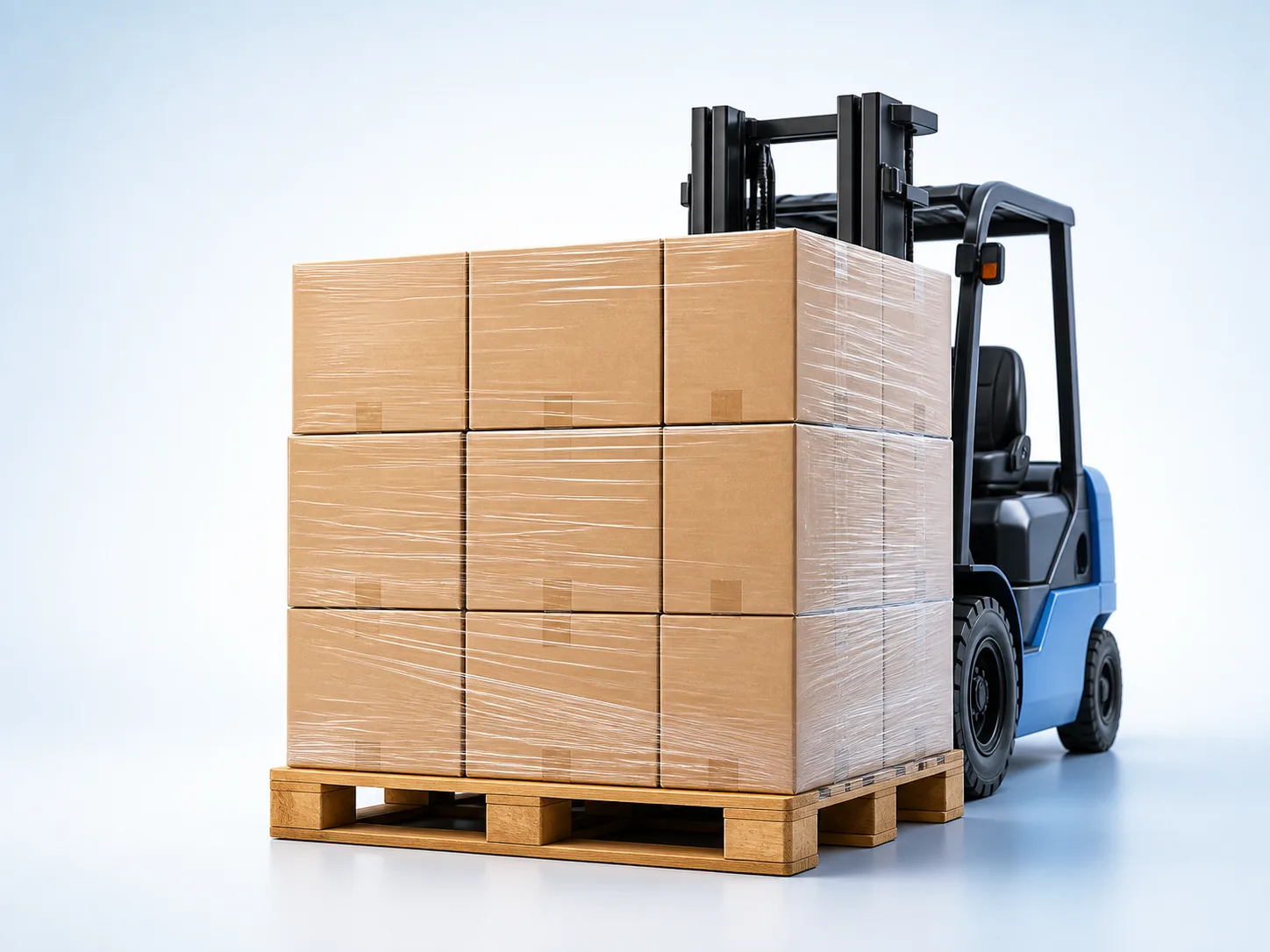
Each pallet has a density of its own. The load has another. Both belong on the paperwork.
Give one line per commodity, measured as it will be handed to the driver: skids under it, wrap around it, and the gross weight of everything on that line. Multiply the three dimensions in inches, divide by 1,728, and you have cubic feet; pounds over cubic feet is the density. The tool does that per line and then again across the whole load.
| Line | Cubic feet | Density | Band | Class |
|---|
Arithmetic only, worked in your browser from what you typed, and sent nowhere. A commodity can carry its own item number in the classification regardless of how dense it is, and the carrier settles the final figures at its terminal, so use these to fill in a bill of lading honestly rather than as the number you expect on the invoice.
Take the two pallets the tool starts with. One is a skid of boxed hardware, heavy and short. The other is the same footprint holding light bulky goods stacked tall. Neither is unusual, and put on one bill of lading they produce three different class answers depending on which number you look at.
| What is on the skid | Measured | Cubic feet | Density | Class the density gives |
|---|---|---|---|---|
| Boxed hardware | 48 × 40 × 42 in, 900 lb | 46.67 | 19.29 lb/cu ft | 70 |
| Light bulky goods | 48 × 40 × 60 in, 220 lb | 66.67 | 3.30 lb/cu ft | 250 |
| Both, treated as one load | 1,120 lb across two skids | 113.33 | 9.88 lb/cu ft | 100 |
The blend lands at 100, which is worse than the hardware deserves and far kinder than the light pallet deserves. Neither pallet is described by it. A shipper who quotes the whole load at 100 and then hands over two skids with visibly different contents has given the terminal a reason to look, and a terminal that looks will re-describe the load using its own tape and scale.
Federal rules set the minimum contents of a motor carrier bill of lading, and a description of the freight and its weight are two of them — which is why the form has room for a line per commodity in the first place. Our bill of lading reference lists the five required items in full.
The averaging problem only bites when the pallets are unlike each other. Put three identical skids on the same pickup and the two figures converge, because the ratio is the same on every line.
| View | Measured | Cubic feet | Density | Class the density gives |
|---|---|---|---|---|
| One skid on its own | 48 × 40 × 45 in, 600 lb | 50.00 | 12.00 lb/cu ft | 85 |
| All three together | 1,800 lb across three skids | 150.00 | 12.00 lb/cu ft | 85 |
Matched skids of a single commodity belong on one line with a piece count. Splitting them across five lines adds paperwork and changes nothing about the rating.
Different commodities get their own descriptions, weights and classes. The tool above is built around that shape because the bill of lading is too.
A single lightweight skid stacked to 70 inches can drag a whole shipment's blended density down by half. Check the outlier before you accept a blended number from anyone.
“If your shipment is already on a pallet, include the height of the pallet in the freight's total height to determine the freight density.” Estes freight class and density calculator, estes-express.com, read 2026-07-29
That instruction costs more than it looks on a multi-pallet load, because it applies to every skid. A stringer deck runs roughly five to six inches and around forty pounds of wood; forget it on five pallets and you have understated the cube by more than two cubic feet per skid while also understating the weight. Wrap, corner boards, slip sheets and a lid all go in the same way. So does overhang: measure the widest point the freight actually reaches, not the footprint of the deck underneath it.
Estes also states on the same page that it may reweigh and dimension freight to check density once the shipment has been collected, and describes what the calculator returns as an estimated freight class. Both sentences were read on 2026-07-29. Every LTL carrier operates the same way with its own tolerances, which is the practical argument for measuring carefully rather than optimistically: a correction found on a dock is applied to the invoice, and the shipment tends to miss the outbound trailer while it is being sorted out.
Old Dominion publishes the input list on its own pricing guide, and it maps cleanly onto the tool above: the class comes from your measurements, and everything else is about the lane and the two ends.
| What is asked for | Where it comes from on a multi-pallet load |
|---|---|
| Shipment weight | Gross for the whole load, and separately per line so each described commodity has a weight against it |
| Shipment dimensions | Every skid measured as built, including deck height and any overhang |
| Freight class | From the density of each described commodity, or from the item number the classification assigns it |
| Origin and destination ZIP codes | Sets the lane, and with it the base rate and the transit standard |
| Accessorial services | Liftgate, residential, appointment, inside delivery — declared at booking, not discovered by the driver |
| Required transit time | Old Dominion notes it is important to flag urgent transit needs when asking for a rate |
Old Dominion also describes the basis of the classification itself: the NMFTA bases classes on an evaluation of a commodity's characteristics, which include density, handling, stowability and liability. Density is only the first of the four, and it is the only one arithmetic can supply. A pallet of the same density can sit a class apart from another because it is fragile, awkward to stack, or expensive to replace.
Pallets are not priced by the parcel checkout on this site, and no page here can print a rate for one. Hand freight review the per-line figures the calculator produced, and a person rates the lane against them. Bring the count of skids, each one's dimensions and weight, what is on it, and whether either end needs a liftgate or an appointment.
If the whole load is light enough to break apart, price the boxes as parcels first. There is a crossover point where a handful of cartons beats a skid, and LTL against parcel shows where it usually sits. Ordinary boxes go straight through the calculator.
Classification and carrier tariffs each change on a timetable of their own, and the rule that decides how a specific carrier rates a mixed load lives in that carrier's own rules tariff rather than in any calculator. The classes here are the figures to open a booking with; confirm them with whoever is hauling the freight.
Not automatically. A bill of lading carries a description and a weight for each commodity tendered, so a load of two unlike commodities is two described lines rather than one averaged one. Work the density out per line first, then look at the shipment total, and expect the two answers to disagree.
Cube each pallet separately, add the cubes, and divide the total weight by the total cubic feet. Adding densities together or averaging them gives a number that means nothing, because a density is a ratio and ratios do not add.
Yes, both its height and its weight. Estes instructs shippers that if the shipment is already on a pallet, the height of the pallet belongs in the freight's total height. A stringer deck adds around five to six inches of height and forty pounds or so of wood before anything is stacked on it.
The terminal settles it. Estes states on its density calculator that it may reweigh and dimension freight to check density once the shipment has been collected. A correction found there is applied to the invoice, and the shipment usually misses its loading window while it is being checked.
No. The checkout prices United States domestic parcel labels. Anything on a pallet is quoted by a person through freight review, who needs the per-line figures this page produces before a carrier can be asked for a rate.