Freight

What is freight class 50?

Class 50 is the bottom rung of the freight classification and the cheapest column an LTL carrier will price you from. Only one number gets a shipment there: 50 pounds per cubic foot. Estes publishes the density scale that ends at that band, read 2026-07-29, and the arithmetic below shows why almost nothing people call class 50 actually is.

Density scale citedPallet math workedTwo cartons quoted 2026-07-29
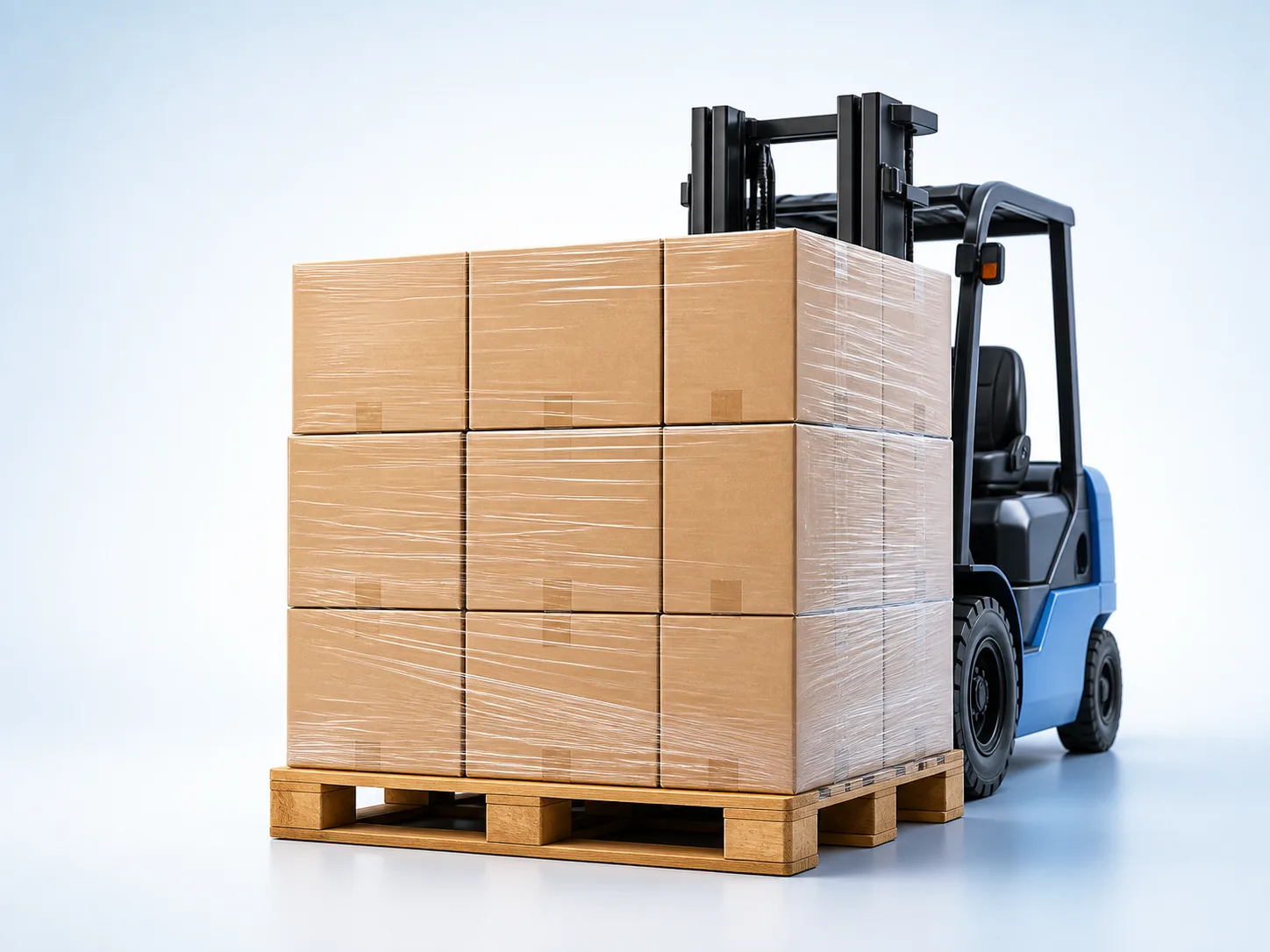
A dense palletized load staged for pickup
The heaviest band there is

Every class above 50 describes freight that leaves air in the trailer. Class 50 describes freight that does not.

One division decides it

Estes publishes a thirteen-band density scale on its Class and Density Calculator, and states the arithmetic in a single line: “Dividing the weight of the shipment by the number of cubic feet will provide the density.” The bottom of that scale, the band reading 50 pounds per cubic foot or greater, is class 50. The same page explains the direction of travel: “High density items will fall under lower classes and are less expensive to transport.” Both lines were read on 2026-07-29.

So the test is three steps and no judgment. Take the built load's outside dimensions in inches, including the pallet and anything overhanging it. Multiply them and divide by 1,728 for cubic feet. Divide the gross weight by that. Land on 50 or above and you are in the class 50 band; land at 49 and you are in class 55, which is a different column of the rate table and a different bill.

Height is where shippers lose the number. Carriers measure a load from the floor, so the pallet's own five or six inches count toward the cube while contributing almost nothing to the weight. A load stacked to the very top of the pallet jack is buying cubic feet it has to fill with pounds.

What 50 pounds per cubic foot weighs in practice

The band sounds modest until it is converted into a number on a scale. Below is the weight a load on a standard 48 by 40 inch footprint has to reach at each build height for the density to hit 50, computed from the outside dimensions with the pallet included.

Gross weight required for a density of 50 lb per cubic foot on a 48 × 40 in footprint, calculated from the load's outside dimensions measured from the floor. The 50 lb per cubic foot threshold is the class 50 band on the density scale published at estes-express.com, read 2026-07-29.
Built heightCubic feetWeight needed for class 50What that looks like
12 in13.33667 lbA single layer of dense stock, wrapped flat
24 in26.671,333 lbHalf-height build of tile, stone or castings
36 in40.002,000 lbA one-ton pallet, and the practical ceiling for many forklifts
48 in53.332,667 lbFull-height build of metal stock or bagged aggregate
60 in66.673,333 lbRare outside of steel, glass and machine parts

Read the third column and the shape of the problem appears. A full-height pallet has to weigh more than a small car to earn the cheapest class in the book. Anything shipped in cartons with void fill, anything with a shape that will not nest, anything holding air on purpose, is somewhere further up the ladder no matter what a broker put on the last bill of lading.

This also explains an old dock habit that still pays. Building the same weight lower and tighter rather than tall and loose moves the density up and the class down, and it is the one lever a shipper controls without renegotiating anything. Run the numbers on your own load with the freight class calculator before you commit to a build height.

Density is one of four inputs, not the whole answer

A tape measure can put a load in the class 50 density band and the classification can still say otherwise. The NMFTA grades a commodity on four transportation characteristics rather than on density alone, and describes freight class on nmfta.org as “the common language of shipping—how carriers and shippers agree on the effort it takes to move a load”, read 2026-07-29. Effort covers more than weight per cubic foot.

An item number outranks the tape

Where the classification gives a commodity its own listing, that listing sets the class. Dense freight with a fragile face or an awkward grab point can carry a number well above 50 while the arithmetic insists otherwise.

The 2025 rewrite widened the density route

NMFTA's supplement took effect on Saturday, July 19 2025 and, in its own words, brought “more instances where freight classes will be determined by actual shipment density”. More loads reach their class by division now than did two years ago.

Class stops mattering at the floor

Every LTL carrier publishes a minimum charge no shipment is billed below. A small, very dense load can be squarely class 50 and still be priced at the floor, where the class column has no effect at all.

If you want the four characteristics in full, they are set out on the freight class explainer, and the whole ladder from 50 to 500 sits on the class chart. The minimum charges that override all of it are on pallet shipping rates.

Freight this dense often has no class at all

Class only exists inside an LTL tariff. A shipment small enough to travel as a parcel never gets one, and dense freight is exactly the kind that stays parcel-sized for longer than people expect. To see where that stops being true we packed steel pipe fittings into two cartons that both land in the class 50 density band and quoted them out of Berkeley Heights, New Jersey to Atlanta on 2026-07-29.

Two cartons of steel pipe fittings, both at class 50 density, quoted from Berkeley Heights, NJ 07922 to Atlanta, GA 30303 through the SMKlog checkout on 2026-07-29. Prices are the full amount a customer pays at checkout, SMKlog's charge already inside, and both rows show the cheapest and the priciest of the five services returned.
CartonCubic feetDensityCheapest rate returnedPriciest rate returned
12 × 12 × 12 in, 50 lb1.0050.0 lb per cu ft$45.01
UPS Ground, 4-5 business days
$74.10
UPS 3 Day Select
16 × 16 × 16 in, 120 lb2.3750.6 lb per cu ft$188.54
UPS Ground, 4-5 business days
$528.21
FedEx Ground

Both cartons sit in the same density band, and the second one costs more than four times the first for two and a half times the weight. That curve is the honest signal for when a class starts to matter: parcel pricing climbs steeply past about a hundred pounds in a single box, and somewhere on that climb a palletized shipment with a class on it becomes the cheaper conversation.

One quieter consequence of being this dense. Parcel carriers compare scale weight against a size-based weight worked out from the carton, and the divisor they use assumes roughly 12 pounds per cubic foot. Freight at 50 pounds per cubic foot is four times past that, so the size-based number never wins and the scale governs every time. Density that buys you the cheapest LTL class also buys you immunity from the parcel volume rule.

Where these rules come from

  • Estes Express Lines, Class and Density Calculator — the thirteen density bands, the class 50 threshold of 50 lb per cubic foot, and the two quoted lines on how density is computed and what it does to cost. Read 2026-07-29.
  • NMFTA, National Motor Freight Classification — the definition of freight class, the 50 to 500 range, and the four transportation characteristics. Read 2026-07-29.
  • NMFTA, A Guide to the NMFC Changes Coming in 2025 — the July 19 2025 effective date and the shift toward classes set by actual shipment density. Read 2026-07-29.

Classification provisions and carrier density scales move on their own schedules. The pages behind this one were current on the date shown, and the carrier hauling your freight prices from its own tariff rather than from anything here.

Common questions

What is freight class 50?

It is the bottom rung of the National Motor Freight Classification and the cheapest column on an LTL rate table. On the density scale Estes publishes, the class 50 band is freight at 50 pounds per cubic foot or greater.

How do I work out whether my pallet is class 50?

Multiply length by width by height in inches, divide by 1,728 to get cubic feet, then divide the gross weight by that figure. Measure the built load from the floor, pallet included. Anything at 50 or above sits in the class 50 band.

How heavy does a pallet have to be to reach class 50?

About 2,667 lb on a 48 by 40 in footprint built 48 in tall. Cut the height in half and it still needs roughly 1,333 lb. Most palletized freight never approaches either number.

Does density on its own decide the class?

No. The NMFTA grades four transportation characteristics, density plus handling, stowability and liability, and a commodity with its own listing in the classification carries the class that listing assigns rather than the one a tape measure suggests.

Does a parcel have a freight class?

No. Class exists in the LTL tariff world only. A dense carton inside parcel limits is priced on weight, size and lane, which is how two cartons at class 50 density quoted $45.01 and $188.54 on the same lane on 2026-07-29.