The floor, not the ceiling

What is the minimum package size for USPS?

There is no smallest box in inches. The Postal Service sets the floor by what the outside of the piece has to carry: address, postage and barcode all flat on one face, no bending and no wrapping around a corner, or the piece is nonmailable. Below a quarter inch thick a different set of rules takes over, and those do come with numbers. Sections quoted here were read on pe.usps.com on 2026-07-28.

Four sections citedRead 2026-07-28Tube exception included
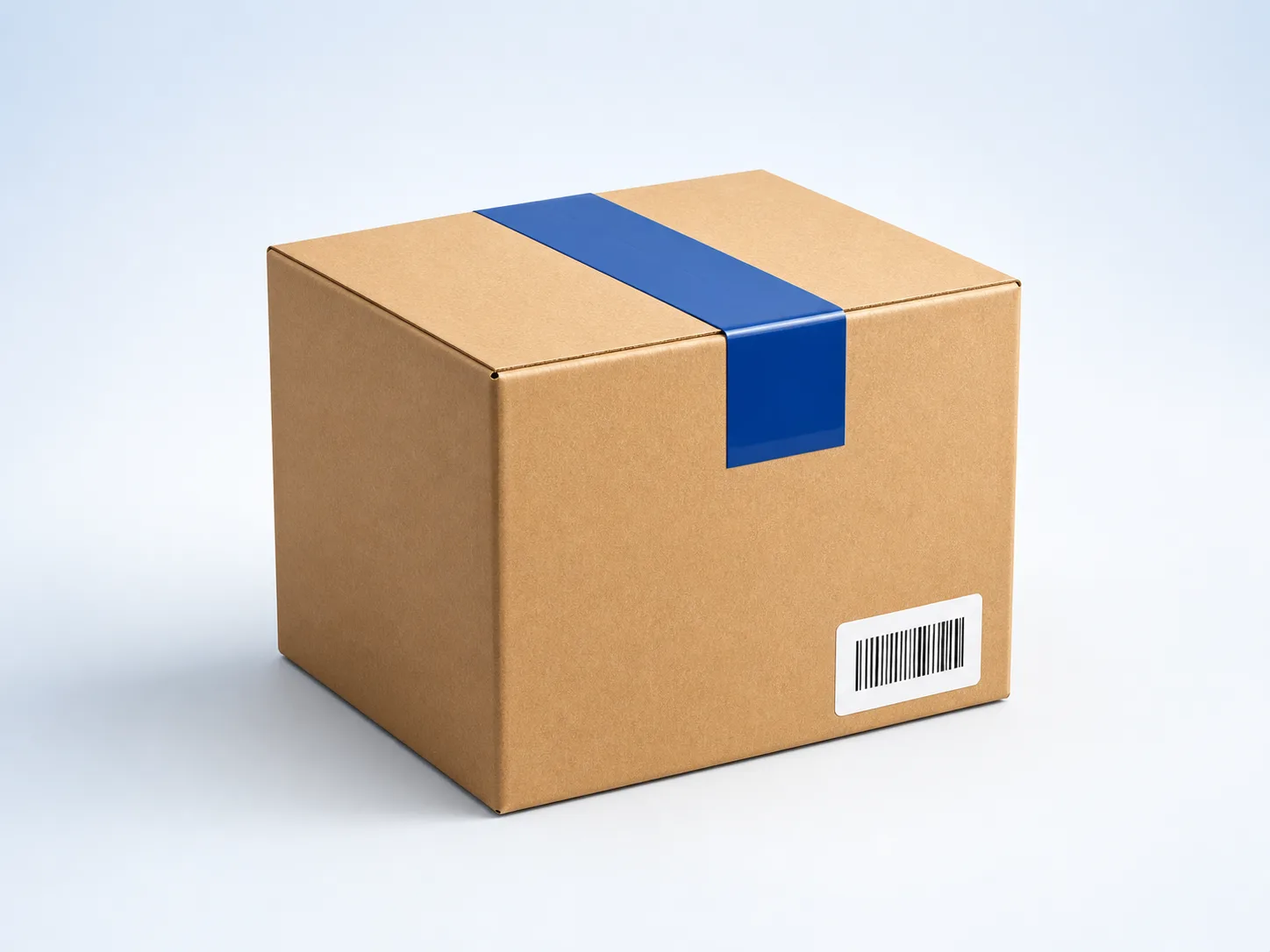
A small carton with a full-size shipping label lying flat on one face
The label decides the box

Every rule below comes back to one thing: a scanner reads a flat surface, so the smallest usable carton is the one with a flat surface big enough.

The rule is written as a test, not a dimension

Mailability sits in section 601 of the Domestic Mail Manual, and the passage that governs undersized parcels reads like a checklist rather than a measurement.

“Except for cylindrical tubes or similar-shaped pieces and labeling exceptions in Publication 52, if all of the following are not placed on a single optical plane without bending, folding, or overlapping, it is nonmailable.”

DMM 601.1.1.5, pe.usps.com/text/dmm300/601.htm, read 2026-07-28

Seven items follow that sentence: address, return address, mailing labels, postage, barcode, endorsements and other mail markings. Section 101.3.2.1a repeats the same requirement from the other direction, listing it under the heading of minimum size for parcels, so a piece that fails the test has failed on size even though no inches were named.

Turn that into something you can act on and it becomes a question about one face of the box. Our own labels come off the printer at 4 by 6 inches, the format the counters and the warehouse rolls both use, so the working floor for anything we quote is a carton with a face that holds a 4 by 6 rectangle flat with the return address and any endorsement beside it rather than curled over an edge. A jewelry box measuring 3 inches square has no such face, which is why it travels inside something larger rather than on its own. The label format page covers what happens when the printing gets scaled down instead.

Tubes are the exception, and it is written into both sections by name. A poster tube narrower than a label is mailable because the rule accepts that a label wrapped around a cylinder is how cylinders have always traveled.

Where USPS does publish inches

Once a piece is a quarter inch thick or thinner it stops being judged as a parcel and picks up the letter and flat minimums, and those are stated plainly.

Minimum dimensions as published in the Domestic Mail Manual at pe.usps.com, sections 101.1.1, 101.2.1, 101.3.2.1, 101.6.2.2 and 601.1.1, all read 2026-07-28. No price appears on this page.
Kind of piecePublished minimumSection
Letter-size mail5 in long, 3-1/2 in high, 0.007 in thick101.1.1a
Letter-size over 6 in long or over 4-1/4 in high0.009 in thick; thinner carries a nonmachinable surcharge101.1.1a and 101.1.2f
Any retail piece a quarter inch thick or less5 in long, 3-1/2 in high, 0.007 in thick101.2.1a
Card claimed at card pricing5 in long, 3-1/2 in high, 0.007 in thick101.6.2.2b
Parcel thicker than a quarter inchno dimension published; the single-plane test applies101.3.2.1a and 601.1.1.5
Cylindrical tube, roll or similar shapeexcepted from the parcel minimum101.3.2.1a and 601.1.1.5

Address placement can sink a piece on its own. Section 601.1.1.3 treats a letter-size mailpiece as nonmailable when the side running parallel to the address falls under 5 inches, or when the side across from it falls under 3-1/2 inches, and the manual works the example of a 4 by 6 card addressed the wrong way around. Same card, same postage, and it fails purely because somebody wrote across the short side.

How to bulk a small item up

Start from the label, work outwards

Lay a full-size label on the largest face of whatever you were planning to use. If it hangs over an edge, the box is too small and no amount of careful taping rescues it. Step up one carton size and the problem disappears for the cost of a little padding.

Keep hard loose objects out of paper

Section 101.1.2d treats an envelope holding pens, keys or coins as nonmachinable because the thickness goes uneven, and adds that loose items can make a letter nonmailable in a paper envelope outright. Rings, memory sticks, spare keys and watch links belong in a padded mailer or a small carton.

Do not assume smaller is cheaper

Price is built from weight, service and the two ZIP codes, and shaving an inch off a small box rarely moves any of them. Quote the packed size you actually intend to hand over, not the optimistic one, and let the rates settle the argument.

Both ends of the range

Most people arrive at this question from the other direction, having found a limit page and wondered whether there was a floor to match. There is, and the two behave nothing alike. The upper limits are hard numbers that differ by service and refuse a parcel outright once they are passed; the lower limit is a handling test that a 3-inch cube fails and a 40-inch tube passes. Our companion page on the published ceilings sets out the weight cap and the two length-plus-girth figures, and the measuring guide shows how to take the numbers off a packed carton without guessing.

If the item genuinely is too small to carry a label, the honest fix is a bigger box rather than a clever fold. Padding costs ounces, and ounces are cheaper than a parcel sitting in a manual-handling bin waiting for somebody to work out where it was going.

Size floor questions

What is the minimum package size for USPS?

For a parcel thicker than a quarter inch there is no figure in inches. DMM 101.3.2.1a sets the floor by function: the piece has to be big enough to carry the address, return address, mailing labels, postage, barcode, endorsements and other markings on one plane, without bending, folding or overlapping.

Can a package be too small to mail?

Yes. DMM 601.1.1.5 makes a parcel nonmailable when those seven items will not sit on a single optical plane, and 601.1.1.3 makes a letter-size piece nonmailable below 5 inches long or below 3-1/2 inches high.

What is the thinnest thing USPS will accept?

0.007 inch, for a piece up to a quarter inch thick. DMM 101.1.1a raises that floor to 0.009 inch once the piece runs past 6 inches long or 4-1/4 inches high, and anything thinner than 0.009 at that size carries a nonmachinable surcharge.

Do narrow tubes have to meet the minimum?

No. Cylindrical tubes and rolls are written out of the parcel minimum in both 101.3.2.1a and 601.1.1.5, which is how a poster tube narrower than a label stays mailable.

How do I ship something tiny, like a ring or a memory stick?

Use a padded mailer or the smallest carton that holds a full-size label flat on one face. Hard loose objects in a paper envelope are the case DMM 101.1.2d warns about, and a barcode bent around a corner is the single failure that costs a week.