Cross-border freight

What changes when a pallet crosses a border

A load that prices cleanly from Newark to Atlanta stops behaving the moment the consignee is in Rotterdam. The wood under the freight now needs a treatment stamp. The density scale that set its domestic class gives way to chargeable weight. And the sales contract has to name which side clears customs. No price appears anywhere on this page, because none exists until all three are settled.

Agency and carrier rules, datedArithmetic shown, not assertedReviewed before it is priced
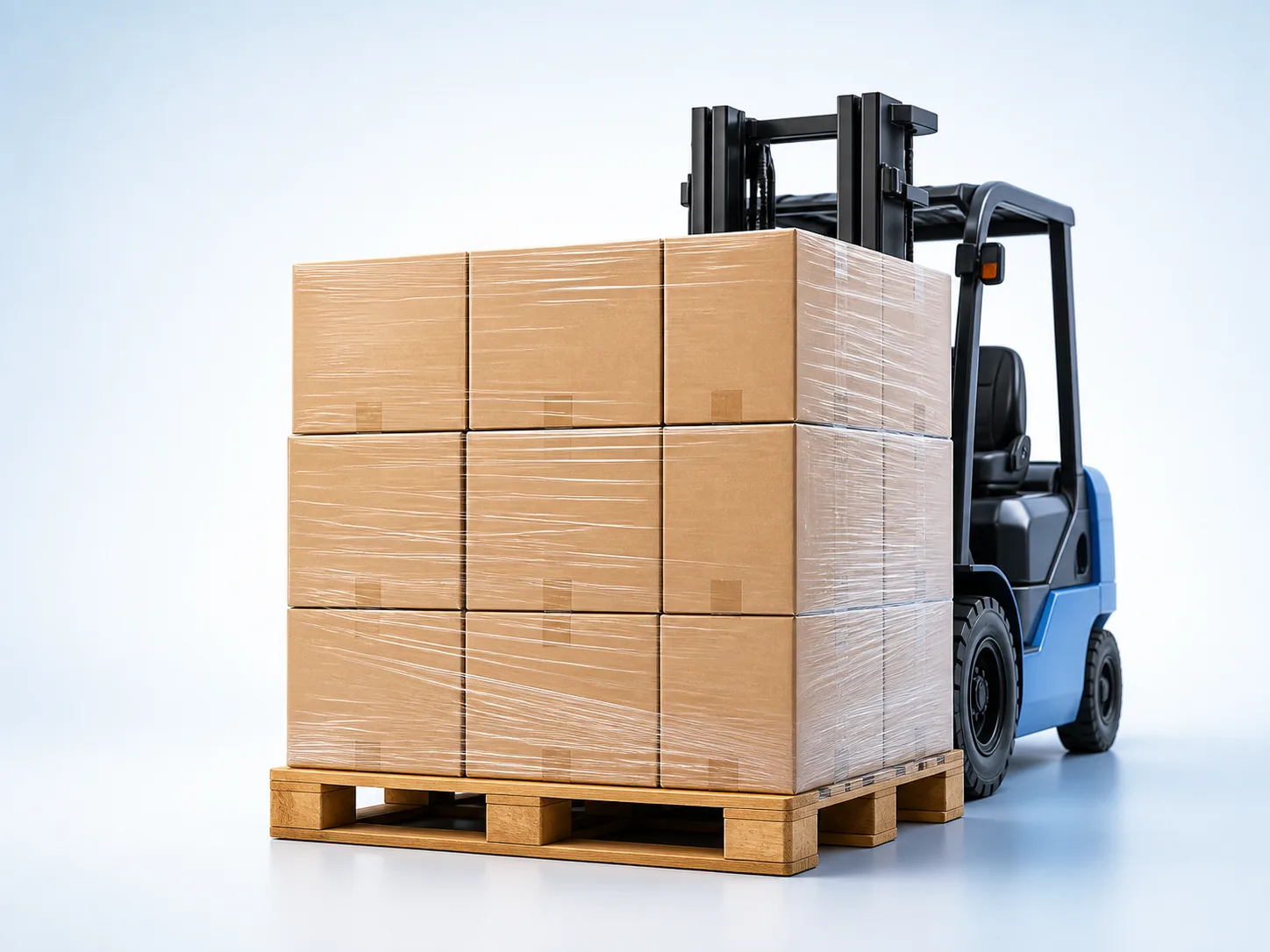
Palletized freight staged for an export move
Same deck, different rulebook

The pallet does not change. The scale it is measured against, the stamp it needs and the person who pays the duty all do.

The class scale stops at the border

Domestic LTL runs on density: pounds per cubic foot, read off a published band, turned into a class number, and everything else negotiated around it. Add weight to a domestic pallet without changing its footprint and the class drops, so the load gets cheaper per pound. Cross-border freight inverts that. It bills on chargeable weight, and DHL Global Forwarding puts the rule in two words on its own page: whichever is greater between the scale weight and a volumetric weight worked from the outside dimensions. That page also publishes the divisors, and they differ enough by mode to change which shipment you should be booking.

Take the same footprint the domestic guides use, a 48 by 40 inch deck loaded to 48 inches tall. In centimeters that is 121.92 by 101.6 by 121.92, which comes to 1,510,232 cubic centimeters, or 1.51 cubic meters. Run it through each published divisor and compare the answer against two real load weights.

One 48 x 40 x 48 in pallet, 1.51 cubic meters, worked through the volumetric divisors DHL Global Forwarding publishes at dhl.com, read 2026-07-31. Every figure in this table is a weight in kilograms, not a price, and the billed column takes whichever of the two weights is higher.
ModeDivisor publishedVolumetric weightBilled at 500 lb (226.8 kg)Billed at 1,200 lb (544.3 kg)
Air freight6,000251.7 kg251.7 kg544.3 kg
Ocean, less than container load1,0001,510.2 kg1,510.2 kg1,510.2 kg
Rail3,000503.4 kg503.4 kg544.3 kg
RoadVaries by location and carrier, per the same pageNot publishedAsk the carrierAsk the carrier

Read that grid across and it says two separate things. Adding 700 lb of goods to the air booking raises the bill by every kilogram of it, where the same 700 lb on a domestic move would have pushed the load into a cheaper class. And on ocean the extra weight is invisible: 1.51 cubic meters is what the shipment costs whether it holds 500 lb or 1,200, which is why dense goods and ocean are such a good match and why half-empty pallets are so punishing there.

One consequence worth acting on before you build the load: every inch of stack height you can remove is paid for at 1,000 to 1 on ocean. Splitting a tall, light pallet into a shorter one is worth more on an export lane than it ever was on a domestic one.

The wood under the load has to be treated and stamped

The stamp burned into the stringers of an export pallet is the international standard for wood packaging, and unlike almost everything else on this page it is not negotiable and not something a forwarder can fix for you at the port. The plant health agency states the heat treatment plainly: the material has to reach a minimum wood core temperature of 56 degrees Celsius and hold it for at least 30 minutes, or be fumigated with methyl bromide instead. Read from aphis.usda.gov on 2026-07-31.

You cannot apply the mark yourself. The American Lumber Standard Committee runs the quality control programs under an agreement with the agency, and a producer has to be enrolled with one of the accredited inspection agencies before it may stamp anything. In practice that means buying pallets already marked, or having marked ones made, and doing it early enough that the deck is on site when the goods are.

The four elements the mark has to carry, from the plant health agency pages on exporting and importing compliant wood packaging material at aphis.usda.gov, read 2026-07-31. Federal material is public domain; the mark artwork itself is not reproduced here.
ElementWhat it shows
Plant protection convention symbolThe graphic that identifies the material as treated to the international standard
Two-letter country codeThe country that produced the wood packaging material
Producer numberThe unique number that country's plant protection agency assigned to the producer
Treatment abbreviationHT for heat treatment, MB for methyl bromide fumigation

No mark means untreated

A blank pallet is not given the benefit of the doubt. Wood packaging entering the United States without the mark is treated as untreated, and the agency states that shipments carrying noncompliant material will not be allowed into the country. Read from aphis.usda.gov on 2026-07-31.

Refused at tender, not at sea

Carriers check before the freight leaves. The UPS preparation guide for its palletized international express product tells shippers that tendered international cargo is checked for compliant wood packaging and that shipments built on noncompliant material may be refused when handed over. Read from ups.com on 2026-07-31.

Bracing counts as packaging

The requirement follows the wood, not the pallet. Loose blocks, chocks, skids and dunnage cut from solid lumber to stop a load shifting need the same mark, and a container whose body is exempt material but whose feet are solid wood still needs the feet marked.

There is a way out, and it is a legitimate one: use a deck the standard does not cover. Manufactured boards such as plywood, oriented strand board, particle board and hardboard fall outside the requirement, as do plastic pallets, metal frames, laminated veneer lumber and inflated dunnage, all named on the agency's import page read on 2026-07-31. For a shipper sending one or two pallets a year, a plastic deck can be less trouble than chasing a stamped wooden one.

Do not confuse this with a phytosanitary certificate. The agency states it is against its policy to issue one for wood packaging used to transport a commodity, so the mark on the wood is the whole of the evidence and no paper accompanies it.

Who clears customs is a contract term, not a default

On a domestic move nobody asks who handles the paperwork, because there is none. Cross-border, the answer is whatever the sales contract says, and the shorthand both sides use is a three-letter rule from the Incoterms set published by the International Chamber of Commerce. There are eleven of them. Seven work for any mode of transport, and four exist only for sea and inland waterway movements, which matters because putting a sea-only rule on an air waybill is one of the more common ways a shipment ends up with nobody responsible for the entry.

The eleven Incoterms 2020 rules and their names, as listed by the International Trade Administration at trade.gov, read 2026-07-31, using the grouping that page applies. Incoterms is a registered trademark of the International Chamber of Commerce.
RuleNameApplies to
EXWEx WorksAny mode
FCAFree CarrierAny mode
CPTCarriage Paid ToAny mode
CIPCarriage and Insurance Paid ToAny mode
DAPDelivered at PlaceAny mode
DPUDelivered at Place UnloadedAny mode
DDPDelivered Duty PaidAny mode
FASFree Alongside ShipSea and inland waterway
FOBFree on BoardSea and inland waterway
CFRCost and FreightSea and inland waterway
CIFCost Insurance and FreightSea and inland waterway

Each rule is written with a place after it, and the place is half the meaning. Delivered at Place followed by a warehouse address in Lyon says something quite different from the same rule followed by an airport. A rule with no named place is an argument waiting to happen.

The trade agency is equally clear about the limits. These rules do not address all the conditions of a sale, do not identify the goods or state the contract price, do not reference the method or timing of payment, and do not fix when title passes from seller to buyer. They also do not specify which documents the seller has to hand over for the clearance, nor cover liability for goods that fail to match the contract, late delivery or how a dispute is resolved. Read from trade.gov on 2026-07-31. A three-letter code is a division of tasks and costs, not a contract.

The two ends of the list are where small shippers get hurt. Ex Works leaves the buyer arranging collection and export formalities in a country it may have no presence in. Delivered Duty Paid puts the seller on the hook for the import entry, the duty and any tax at the far end, which is easy to agree to and expensive to discover. The middle of the list exists because most sensible deals sit there.

Ocean or air, on the same pallet

The divisor table above already answers most of this question, but the operational differences matter as much as the arithmetic. Choose the mode against the density of what you are actually sending rather than against a general preference for speed or thrift.

Light and urgent goes by air

At a 6,000 divisor the volume penalty is mild, so a bulky but light pallet is not punished the way it would be on the water. The tradeoff is that every additional kilogram of real weight is charged, so air stops making sense as soon as the load gets dense.

Dense and patient goes by sea

At a 1,000 divisor the shipment is charged on the space it occupies, so the more mass you can fit into 1.51 cubic meters the better the deal gets. Sharing a container also brings consolidation handling at both ends and a customs entry you own.

One pallet is often the wrong unit

A single pallet carries the fixed costs of a cross-border move on its own: the entry, the handling at each terminal, the road leg after the port. Two or three pallets on the same booking usually cost far less than twice one, which is worth checking before you split an order.

If the answer is ocean, the filing deadlines are the part that catches first-time shippers, and they are set out on the less than container load guide alongside the published container capacities. If the answer is a palletized express product instead, the carrier rules are stricter than a parcel service and worth reading in advance: UPS states that its international express freight product is for palletized shipments over 150 pounds, that the freight must be stackable, forkliftable and secured to the deck, and that pre-authorization is required for any shipment over 4,400 pounds. Read from ups.com on 2026-07-31.

How a cross-border pallet gets priced here

A person prices it. That is not a hedge, it is how the site is built: palletized, crated, oversized and international requests are routed to manager review rather than to checkout, because the inputs that decide the number are not things a rate form can infer from a weight box. The commodity classification, the mode, the terms of sale, whether the far end has a dock, and who is named as importer all change the answer, and getting them wrong produces a quote that collapses at the first invoice.

What to have ready when you send it in: the origin and destination cities, the finished pallet dimensions and weight for each unit, a plain description of the goods and what they are made of, the commercial value, the terms-of-sale rule you have agreed, and whether the wood is stamped or is an exempt material. With those, a quote comes back covering the whole move rather than the ocean or air leg on its own.

Parcel-sized boxes are faster the other way. The calculator prices United States domestic parcels live and will say so plainly when a shipment is outside what it can handle.

Where these rules come from

Destination countries layer their own admissibility rules on top of all of this, and they change them without warning. What is printed above is what those five sources showed on 2026-07-31. Confirm the wood packaging requirement for the specific destination before the deck is built.

Common questions

Does an export pallet need heat-treated wood?

Yes, unless the deck is made of an exempt material. The plant health agency sets heat treatment at a minimum wood core temperature of 56 degrees Celsius held for at least 30 minutes, with methyl bromide fumigation as the alternative, and the stamp is applied by a producer enrolled with an accredited inspection agency rather than by the shipper.

How is an international pallet priced if not by freight class?

By chargeable weight. The forwarder works out a volumetric weight from the outside dimensions, compares it with the scale weight, and bills the larger of the two. The density bands that set a domestic class play no part in it.

What has to be on the ISPM 15 stamp?

Four elements: the plant protection convention symbol, the two-letter country code for the country that produced the material, the number that country assigned to the producer, and the treatment abbreviation, HT for heat treatment or MB for methyl bromide.

Which terms-of-sale rule should go on the paperwork?

The one both sides can actually perform. A seller with nobody at the far end should not agree to Delivered Duty Paid, and a buyer with no forwarder should not accept Ex Works. Whichever is chosen, write the named place next to it.

Can I buy an international pallet label on this site?

No. Our calculator prices United States domestic parcels. A palletized or cross-border move goes to freight review, where a person builds the quote from the lane, the mode, the commodity and the terms of sale.